
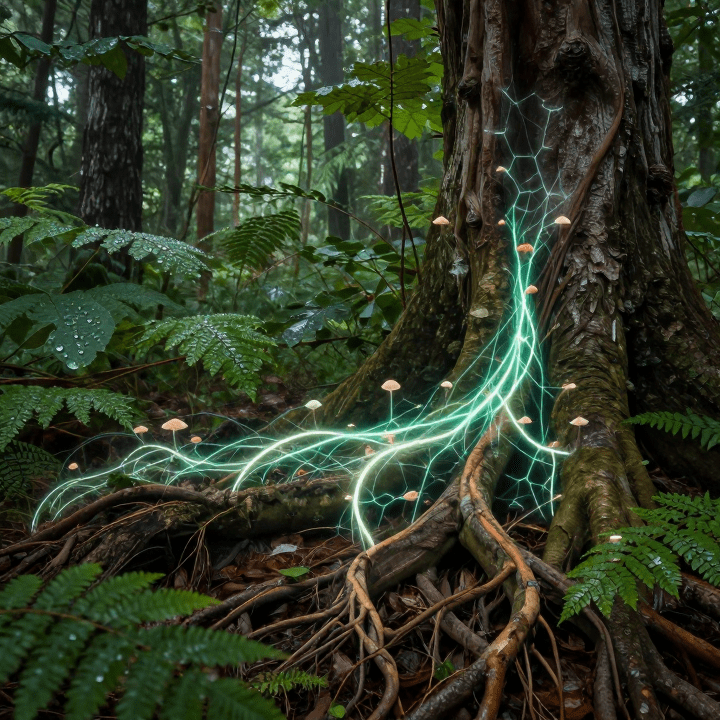
Imagine stepping into a forest, a bustling metropolis of life where every rustle, every scent, every subtle shift in light carries a message, a vital conversation happening all around us, unseen and unheard.
For decades, scientists have gathered immense amounts of data about the natural world, but the sheer complexity of these interactions – from chemical signals to acoustic patterns – felt like an unbreakable code, too vast for human minds alone to decipher.
Now, Artificial Intelligence acts as nature’s universal translator. Advanced AI algorithms process these colossal datasets, finding patterns in ultrasonic plant clicks, analyzing the subtle chemical warnings trees release, and mapping the intricate soundscapes of entire ecosystems.
This ability to decode nature’s hidden language isn’t just fascinating; it’s revolutionary. It allows us to understand plant distress before it’s visible, to monitor wildlife populations with unprecedented detail, and to respond to ecological changes faster than ever before, ushering in a new era of conservation and a deeper connection with our planet.