
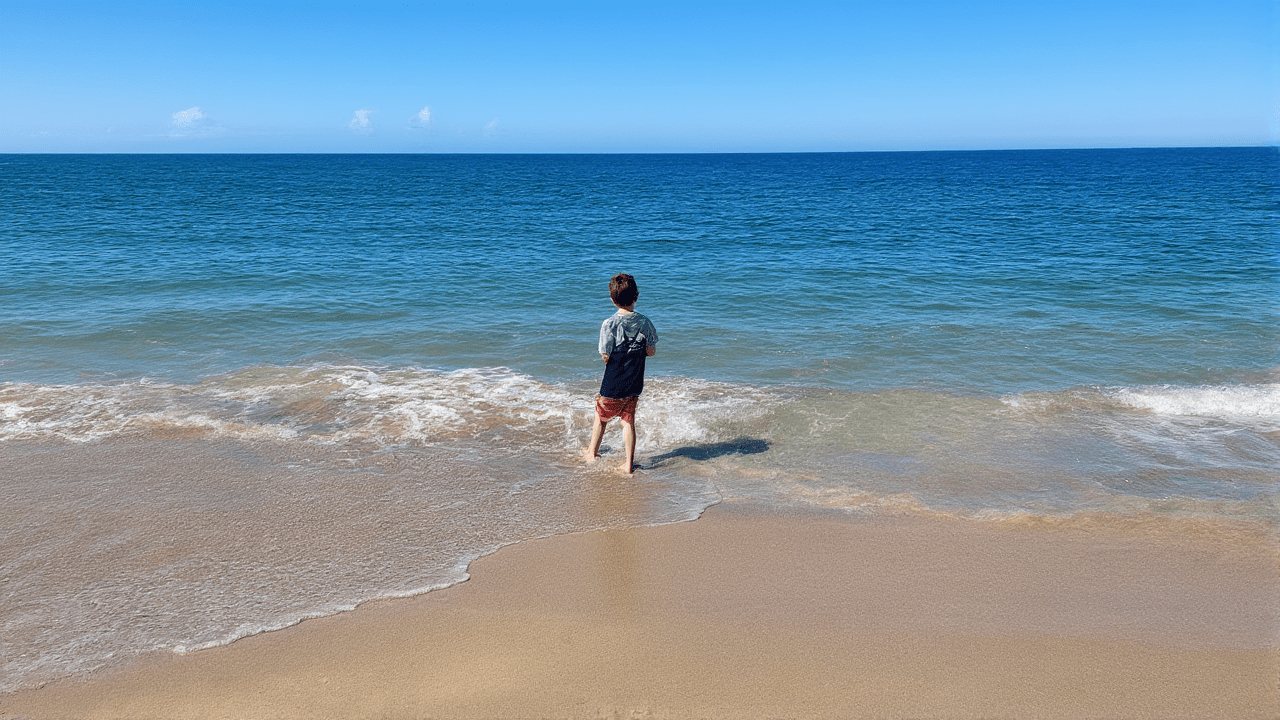
Have you ever wondered why the ocean is so salty, even though rivers that flow into it are fresh? It’s a fascinating story that unfolds over millions of years!
It all starts on land. When rain falls, it’s slightly acidic, picking up a tiny bit of carbon dioxide from the atmosphere. As this slightly acidic rainwater flows over rocks and soil, it acts like a mild solvent.
This rainwater dissolves tiny amounts of minerals, including various salts, from the rocks. Rivers and streams then carry these dissolved minerals, like tiny invisible passengers, all the way to the ocean.
Once in the ocean, a magical process happens: evaporation! The sun heats the ocean surface, causing pure water to evaporate into the atmosphere, leaving behind the dissolved salts. Think of it like boiling a pot of salty water; the steam is fresh, but the salt stays in the pot.
But that’s not the only source. Underwater volcanoes and hydrothermal vents on the ocean floor also spew out mineral-rich fluids, contributing even more dissolved salts and chemicals directly into the seawater.
Over billions of years, this continuous cycle of rain washing minerals from land, rivers carrying them to the sea, and water evaporating, has led to the immense saltiness of our oceans. It’s a perfectly balanced, ongoing natural process!