
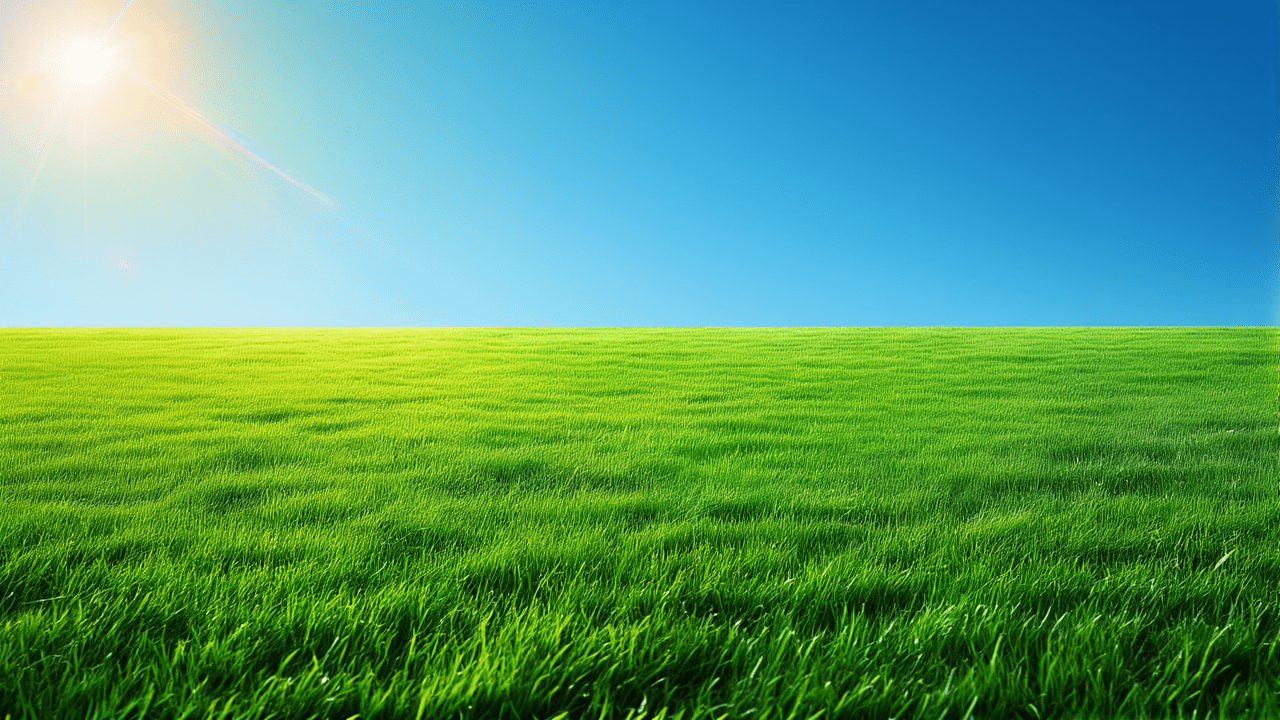
Have you ever wondered why grass, and most plants for that matter, are green? It seems like such a simple question, but the answer involves fascinating science!
The secret lies in a special pigment called chlorophyll, found in tiny powerhouses within plant cells called chloroplasts. Chlorophyll is what gives plants their green color.
Sunlight, which appears white to us, is actually made up of all the colors of the rainbow, each with a different wavelength. When light hits an object, some colors are absorbed, and others are reflected. The color we see is the light that’s reflected back to our eyes.
Chlorophyll is exceptionally good at absorbing red and blue light wavelengths. These are the colors plants primarily use for photosynthesis, the process where they convert sunlight into energy.
But here’s the kicker: chlorophyll doesn’t absorb much green light. Instead, it reflects it away. And because that green light is reflected, that’s the color our eyes perceive, making grass appear green!
So, grass is green because chlorophyll, its essential energy-making pigment, is designed to efficiently capture the red and blue parts of sunlight, reflecting the green light we see. It’s a natural marvel of efficiency and survival!