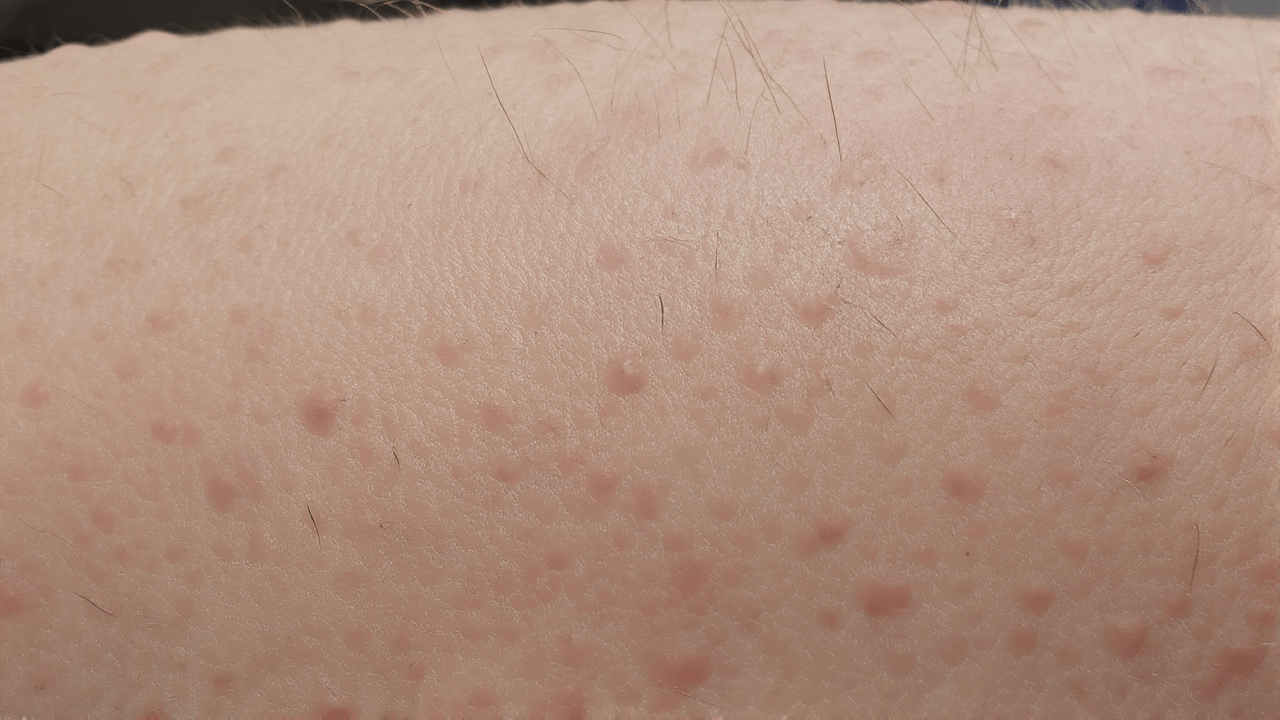
Hey everyone, and welcome back! Ever wondered why your skin sometimes gets those tiny bumps, making your hairs stand on end? You know, “goosebumps!” It’s a common experience, whether you’re freezing, watching a scary movie, or even listening to an amazing song. But what’s really going on? Let’s find out!
So, what exactly are goosebumps? Scientifically, they’re called piloerection. They happen when tiny muscles at the base of each hair, called arrector pili muscles, contract and pull the hair straight up. This creates that distinctive bumpy texture on your skin.
This whole process is an involuntary reflex, meaning you don’t consciously control it. It’s triggered by your sympathetic nervous system, often called the “fight or flight” response system. When activated, this system releases a hormone called adrenaline, which signals those tiny muscles to contract.
Now, for the “why.” Goosebumps are actually a leftover from our ancient, hairier ancestors. For them, this reflex served two main purposes.
First, when they got cold, their fur would stand on end, trapping a layer of insulating air close to their skin to help keep them warm. Think of it like a natural, built-in puffy jacket!
Second, when faced with danger or fear, making their hair stand up would make them appear bigger and more intimidating to predators, much like a startled cat puffs up its fur. It was a simple, yet effective, defense mechanism.
Today, since humans have much less body hair, goosebumps don’t really help us much with insulation or making us look bigger. They’re a “vestigial reflex,” a fascinating biological relic that reminds us of our evolutionary past. But they still pop up when we’re chilly, scared, or even moved by strong emotions like awe or excitement!
So, the next time you feel those little bumps, remember it’s your body’s ancient warning system and thermostat kicking in, a cool connection to our ancestors!