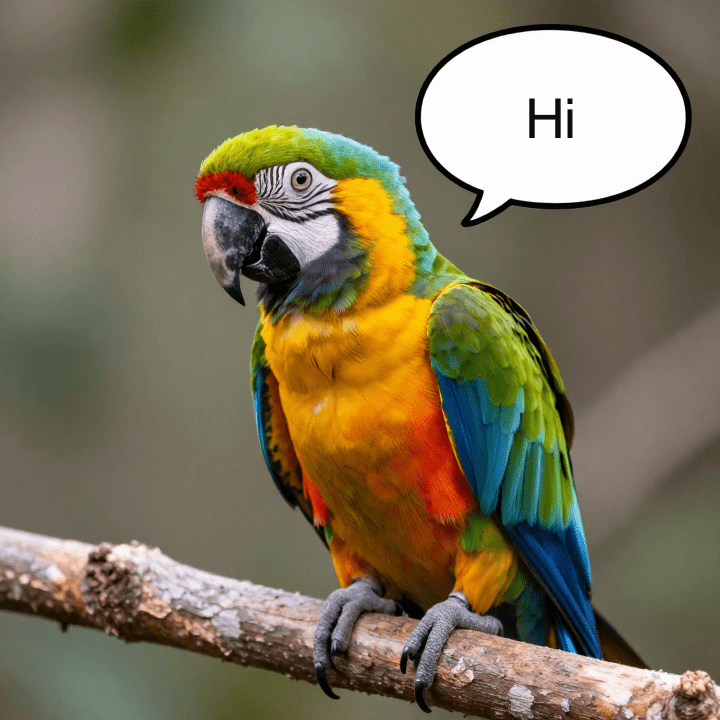
Have you ever wondered why some parrots can sound so uncannily like us, while your cat just… meows? It’s one of nature’s most amazing feats, and today, we’re diving into the fascinating reasons behind a parrot’s gift of gab!
Unlike us, who use a larynx, parrots possess a special vocal organ called a syrinx. It’s incredibly flexible, allowing them to produce a wide range of sounds, from squawks to surprisingly clear human words!
But it’s not just about their vocal cords; it’s also in their brains! Parrots have unique brain structures, often called “song nuclei,” that are exceptionally well-developed. These areas help them learn and produce sounds, similar to how human brains process language.
In the wild, parrots are highly social creatures. They use a complex array of calls to communicate within their flocks – for warnings, finding food, or just keeping in touch. Learning new sounds is a vital part of belonging!
When parrots live with humans, we become their flock. They try to mimic our sounds, including our speech, to fit in and communicate with us. It’s their way of bonding and showing they’re part of the family!
While they can perfectly imitate words, it’s important to remember that parrots don’t truly “understand” language in the same way humans do. They’re mimicking sounds they associate with situations or reactions, like saying “Hello!” when someone enters a room.
So, from their unique vocal anatomy to their intelligent, social brains, parrots are master mimics driven by instincts to communicate and connect. It’s truly astonishing, isn’t it?