
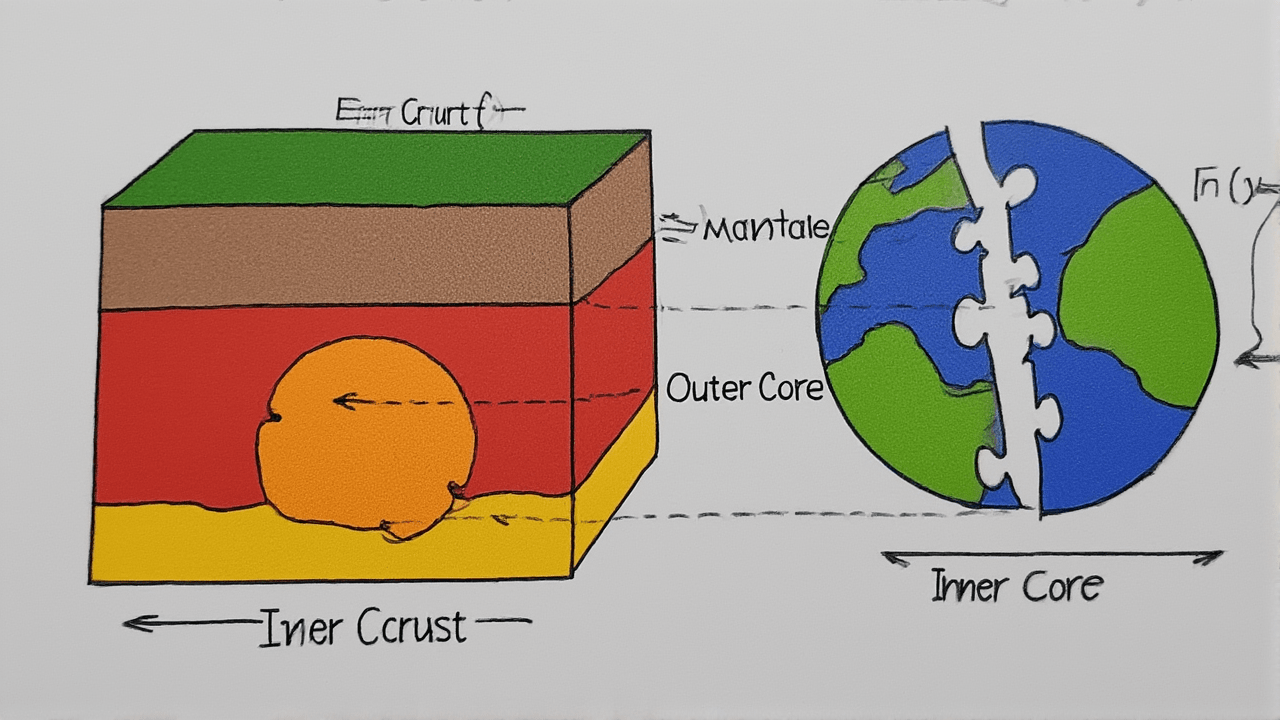
Have you ever wondered why the ground sometimes shakes beneath your feet? It’s all thanks to something incredible happening deep inside our Earth! Imagine our planet isn’t just one solid ball. Instead, its outermost layer, called the “lithosphere,” is actually broken into huge, jigsaw-puzzle-like pieces.
These giant pieces are called “tectonic plates,” and they’re always, always moving, though very slowly. They float on a softer, molten rock layer beneath them, sort of like rafts on a really thick, gooey ocean.
Now, as these massive plates drift, they don’t always glide smoothly. Sometimes, their edges get stuck against each other because of friction, like when you try to slide two rough blocks of wood together.
Even though they’re stuck, the plates keep trying to move. This causes a lot of stress to build up in the rocks along their edges, which we call “faults.” Think of it like bending a stick slowly. You’re storing up energy, right?
Eventually, that stored-up stress becomes too much, and the rocks suddenly break and slip past each other. When this happens, all that built-up energy is released in waves, like ripples in a pond! These are called “seismic waves,” and they travel through the Earth, causing the ground to shake.
The spot deep underground where the rock first breaks is called the “focus,” and the place directly above it on the surface is the “epicenter.” That’s usually where the shaking is felt most intensely. So, most earthquakes happen along these plate boundaries, which is why some regions of the world experience them more often than others!