
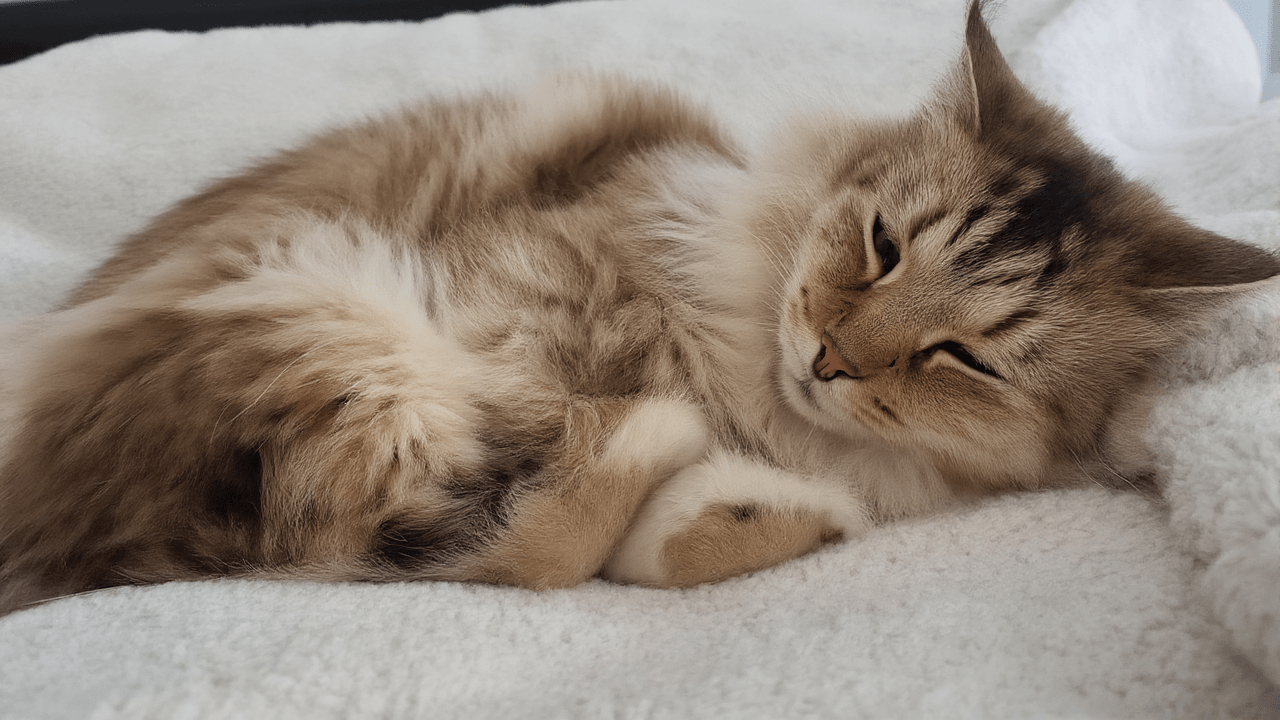
Have you ever wondered why your feline friend makes that adorable, rumbling sound? Why do cats purr?
Well, it’s pretty neat! Cats purr using a special trick in their throat. Muscles around their voice box, or larynx, vibrate super fast, typically between 25 and 150 hertz, as they breathe in and out. This vibration hits a small bone called the hyoid bone, creating that distinct purring sound.
Now, most of us associate purring with a happy cat, right? And you’re often spot on! Cats purr when they’re feeling cozy, relaxed, and loved—like when they’re curled up on your lap, kneading a soft blanket, or enjoying a good meal. It’s their way of saying, “I’m content!”
Purring starts when they’re just tiny kittens! It helps them communicate with their mom, letting her know they’re okay and creating a strong bond.
But here’s where it gets really interesting: cats don’t only purr when they’re happy. They also purr when they’re anxious, stressed, or even in pain. Think of it like a human sighing or even smiling to cope with a tough situation. It’s a way for them to self-soothe and try to feel better.
And get this: some scientists believe purring actually helps them heal! The low-frequency vibrations can potentially help strengthen bones, repair muscles and tendons, and even reduce pain. It’s like a built-in therapy session!
Cats can even use different kinds of purrs to tell us what they want. There’s a “solicitation purr” that sounds a bit like a meow mixed with a purr, which they often use to ask for food or attention. It’s almost like a baby crying, and it really gets our attention!
So, next time your cat purrs, remember it’s a complex and fascinating form of communication. It could mean they’re blissfully content, trying to calm themselves down, or even healing. Understanding the context and their body language helps us know exactly what our amazing feline friends are trying to tell us.