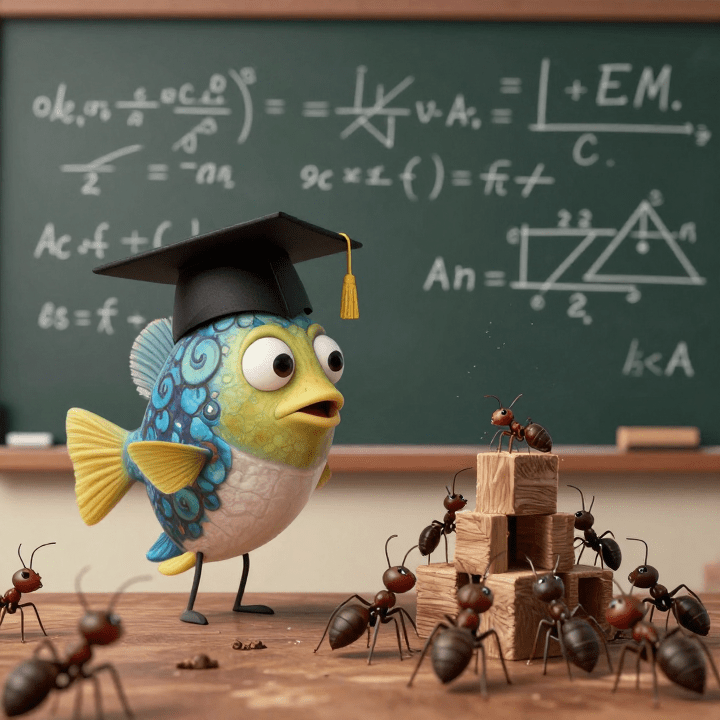
Ever thought of a fish having its own traditions, or an ant colony passing down wisdom through generations? It sounds wild, right? But scientists are now asking: why are we discovering complex social learning and even ‘cultural’ behaviors in animals we once considered simple, like fish and insects?
When we talk about animal ‘culture,’ we mean learned behaviors, passed socially, not genetically, within a group. Think tool use, unique foraging techniques, or even migratory routes taught by elders. Traditionally, this was reserved for animals with big brains, like primates or dolphins.
But now, studies on species like cichlid fish show them learning foraging routes from experienced individuals, or even choosing mates based on what their peers prefer! They’re observing, imitating, and maintaining these practices within their groups.
And then there are insects! Leafcutter ants, for example, demonstrate complex division of labor and even farming techniques for fungus that are passed down through generations of colonies, not just genetically, but through social learning. Bees have complex dances that transmit information about food sources.
So, why is this happening? Perhaps our understanding of “simple” brains was, well, too simple! It suggests that the capacity for social learning and adapting to environments in complex, non-genetic ways is far more widespread than we ever imagined, evolving to solve survival challenges.
This new understanding challenges our definitions of intelligence and culture, forcing us to look at the animal kingdom with fresh eyes. It highlights the incredible adaptability of life and reminds us how much more there is to learn about our planet’s diverse inhabitants.