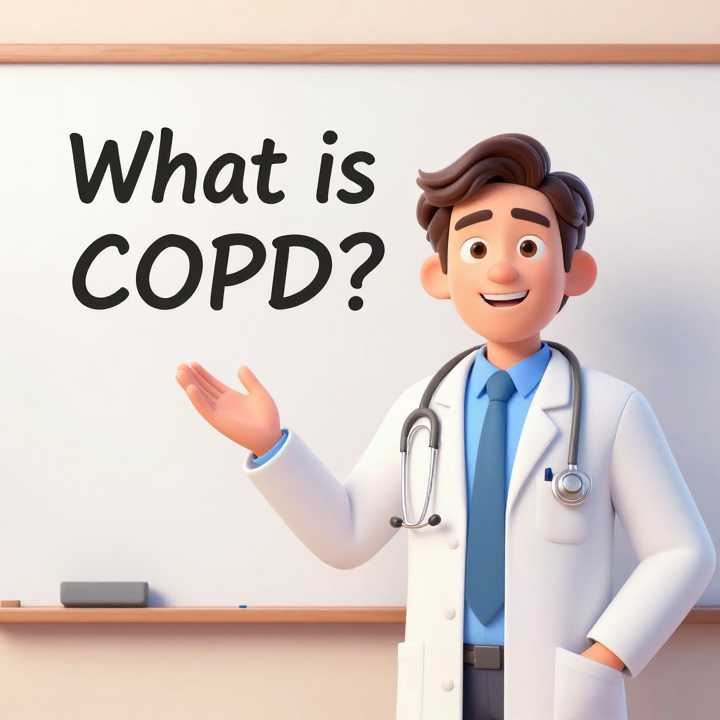
Hey everyone, and welcome back! Today, we’re talking about something super important for your health: COPD. You might have heard the term, but what exactly is it?
Well, COPD stands for Chronic Obstructive Pulmonary Disease. Think of it as a group of lung diseases that make it really hard to breathe. It’s a chronic condition, meaning it’s long-term and tends to get worse over time.
Two main players in COPD are chronic bronchitis and emphysema. Let’s start with chronic bronchitis. Imagine the breathing tubes in your lungs, called bronchi. With chronic bronchitis, these tubes get inflamed and swollen, producing a lot of sticky mucus. This makes the airways narrow, like trying to breathe through a clogged straw.
Then there’s emphysema. This affects the tiny, delicate air sacs at the end of your airways, called alveoli. Normally, these sacs are like tiny balloons, helping oxygen get into your blood and carbon dioxide out. But with emphysema, the walls of these sacs get damaged and break down, creating larger, less efficient air pockets. This traps stale air and makes it much harder for your body to get the oxygen it needs.
So, what causes this lung damage? The biggest culprit, by far, is smoking, both active and passive. But other things like air pollution, dust, and chemical fumes from your workplace can also contribute.
The symptoms often start slowly and worsen over time. You might notice shortness of breath, especially during activities, a persistent cough that might bring up mucus, and wheezing. You might also feel tired a lot and have chest tightness.
If you experience these symptoms, it’s super important to see a doctor. They can diagnose COPD with simple breathing tests and help you manage it. While there’s no cure, treatments can significantly improve symptoms and your quality of life.
The best thing you can do to slow down COPD’s progression is to stop smoking and avoid lung irritants. Regular exercise, a healthy lifestyle, and following your doctor’s treatment plan are also crucial. Your lungs work hard for you, so let’s give them the care they deserve!