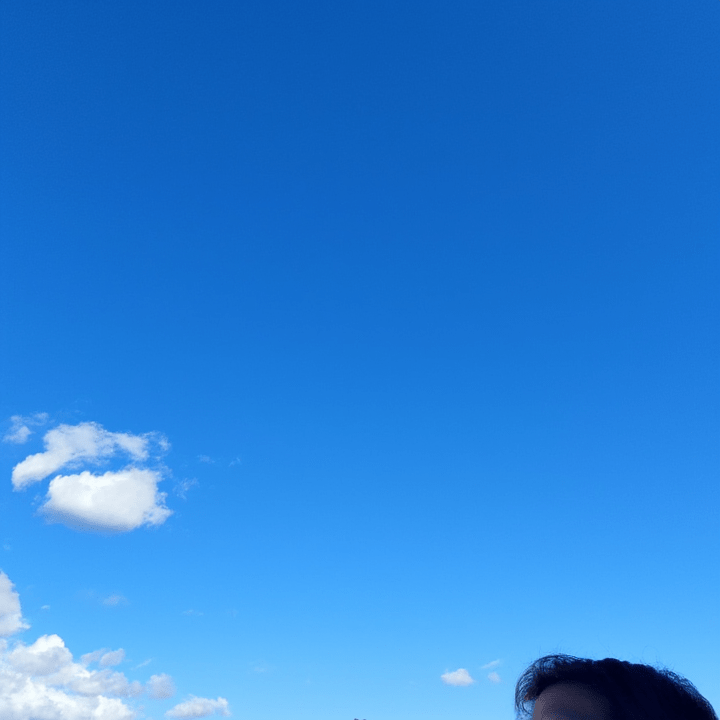
Have you ever looked up at the vast, beautiful sky and wondered, “Why is it blue?”
Well, it all starts with sunlight! Sunlight, which looks white to our eyes, is actually made up of all the colors of the rainbow, each with a different wavelength, or size of wave.
Our Earth is surrounded by an atmosphere, a blanket of air made of countless tiny gas molecules, mostly nitrogen and oxygen.
As sunlight travels through our atmosphere, it bumps into these incredibly tiny air molecules. This interaction, where light gets bounced around, is called “scattering.”
Here’s the key: blue light waves are shorter and choppier compared to other colors like red, which have longer, smoother waves. Because blue light waves are so small, they hit the tiny air molecules much more frequently and effectively.
When blue light hits these air molecules, it gets scattered in all directions, bouncing around everywhere, like tiny little pinballs. It’s this widely scattered blue light that reaches our eyes from every part of the sky, making it appear wonderfully blue!
Now, you might wonder, “What about those stunning sunsets?” When the sun is low on the horizon, its light has to travel through a much thicker and longer path of atmosphere. By then, most of the blue light has already been scattered away, leaving the longer red and orange wavelengths to reach our eyes, giving us those spectacular golden and crimson skies.
So, the next time you gaze at our beautiful blue sky, remember it’s all thanks to tiny air molecules scattering sunlight, especially those energetic blue light waves! It’s a simple, yet fascinating, scientific phenomenon.