
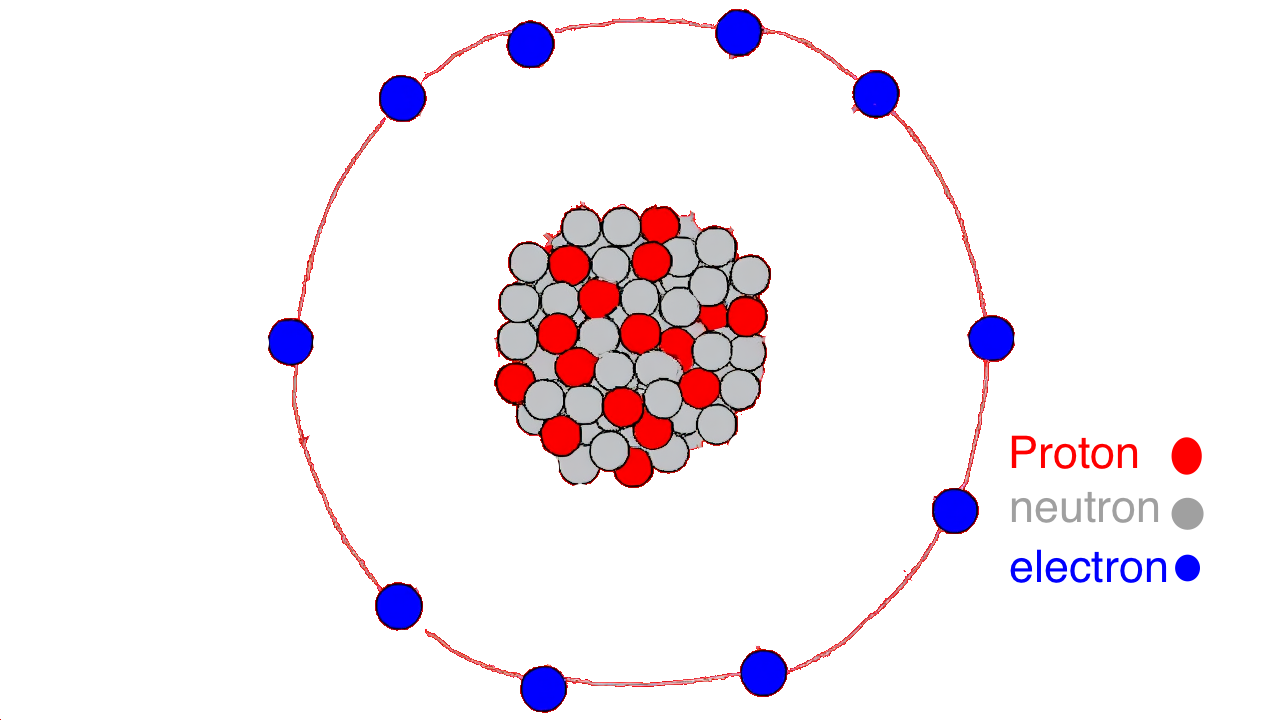
Hey there, ever wondered what everything around you is made of? Well, it all boils down to incredibly tiny particles called atoms!
Inside every atom, there’s a dense core called the nucleus. And in that nucleus, we find particles called protons. Think of protons as an atom’s ID card – they absolutely determine what element it is!
But wait, there’s another particle often found in the nucleus: neutrons. They’re like silent partners, hanging out with the protons, and they don’t carry any electrical charge.
Now, here’s where it gets interesting! Sometimes, atoms of the same element – meaning they have the same number of protons – can have a different number of neutrons .
Imagine cars. You might have the same model of car, say, a red sedan. But one could have a basic engine, another a slightly more powerful one, and a third, an even stronger one. They’re still the same ‘car model,’ but with different internal ‘weights’ or features.
A perfect example is hydrogen. Most hydrogen atoms have just one proton and no neutrons – we call it protium. But some have one proton and one neutron – that’s deuterium! And a rare type has one proton and two neutrons – tritium.
So, in simple terms, isotopes are like family members of the same element. They share the same identity – the same number of protons – but they have slightly different ‘weights’ because of varying numbers of neutrons.