
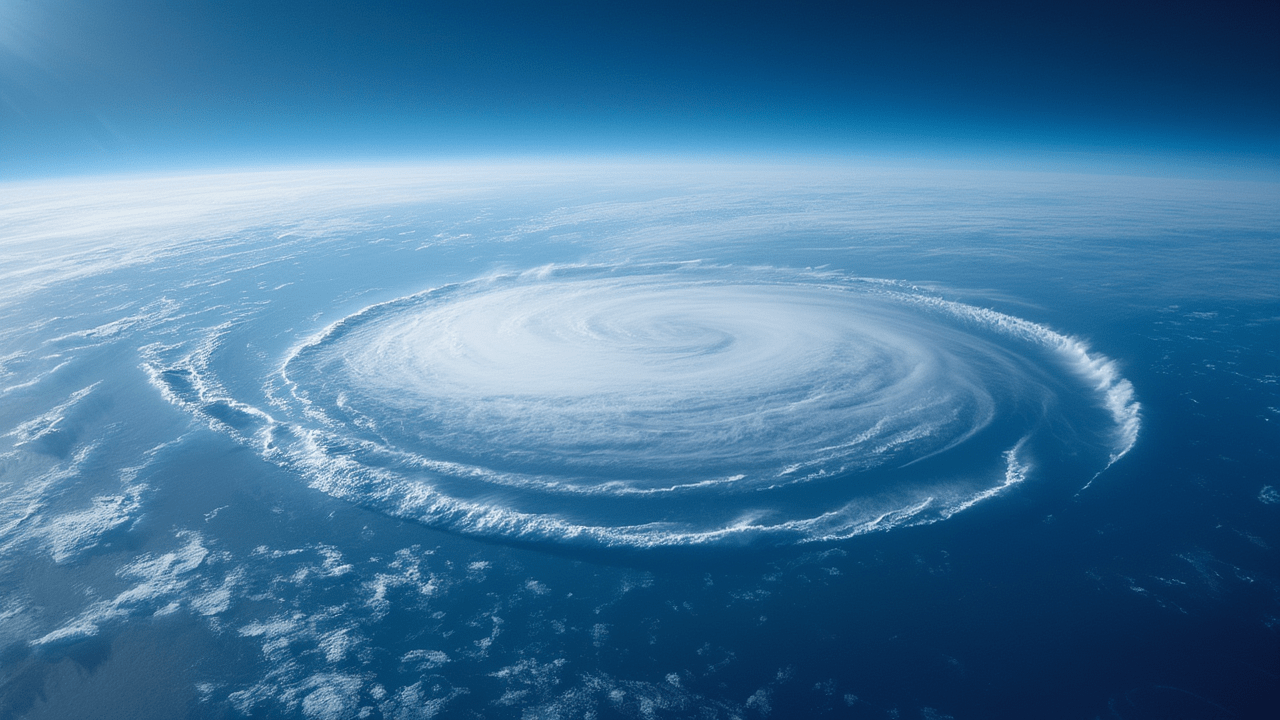
Have you ever seen two dancers swirling around each other, gracefully moving in a synchronized rhythm? Well, sometimes, giant storms in our oceans do something quite similar! It’s a fascinating weather phenomenon known as the Fujiwhara effect.
Imagine two massive hurricanes, each spinning on its own axis, like giant cosmic tops. When these powerful storms get close enough, typically within about 900 miles of each other, they start to feel each other’s presence. Their winds begin to interact, and instead of just moving independently, they enter a gravitational, or rather, atmospheric, dance!
Instead of crashing into each other, or simply passing by, these storms start to orbit a common point between them. Think of it like two magnets pulling at each other, but instead of sticking, they start to circle! The larger or stronger storm often dictates the pace, pulling the smaller one along, sometimes even absorbing it.
The outcome of this cosmic ballet can vary. Sometimes, the storms merge into one giant, more powerful hurricane. Other times, one storm might weaken and be absorbed by its stronger partner. And occasionally, they might just complete their rotation and then go their separate ways, leaving meteorologists with a challenging puzzle to solve.
Understanding the Fujiwhara effect is crucial for weather forecasters. It helps them predict the unpredictable, saving lives and property by accurately tracking these interacting storm systems. It’s a reminder of the incredible, complex power of nature!