
Hey space enthusiasts! Have you ever heard an astronomer say a planet is “in opposition?” Sounds a bit dramatic, doesn’t it? Well, it’s actually one of the best times to see a planet, and today, we’re going to break down exactly what it means!
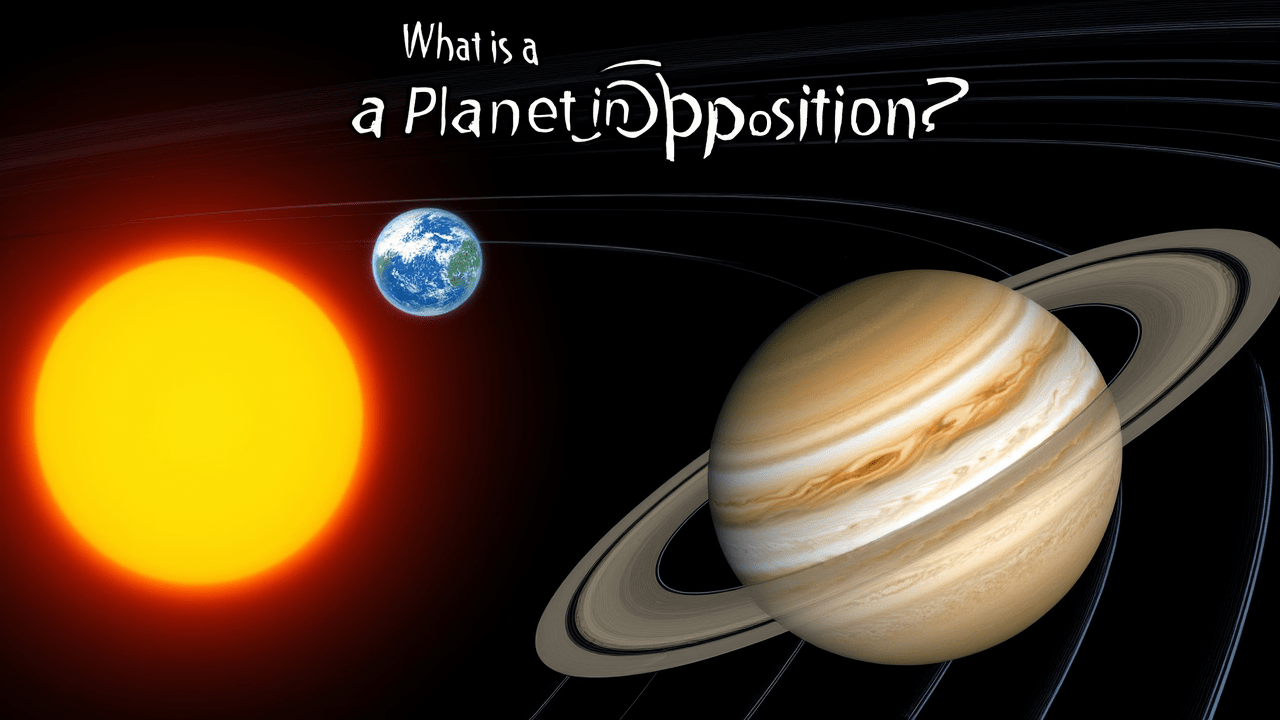
Imagine our solar system. We have the Sun, and all the planets, including Earth, orbiting around it. When a planet is “in opposition,” it simply means that the Sun, Earth, and that particular planet are lined up in a nearly straight line, with Earth right smack in the middle! Think of it like this: if you drew a straight line from the Sun, through Earth, and kept going, you’d hit the planet in opposition.
So, why is this alignment so special for stargazers? When a planet is in opposition, it’s at its closest point to Earth in its orbit. This means it appears much larger and brighter in our night sky than usual! Plus, because it’s opposite the Sun, it rises around sunset, is highest in the sky at midnight, and sets around sunrise, giving us an entire night to observe it. It’s like the planet is putting on its best show just for us!
Now, here’s a fun fact: only planets further out from the Sun than Earth, what we call “superior planets,” can be in opposition. So, that’s Mars, Jupiter, Saturn, Uranus, and Neptune. Mercury and Venus, our inner neighbors, can never be in opposition because they’re always between us and the Sun! Mars, in particular, can be incredibly striking during opposition, sometimes becoming the second brightest planet after Venus.
So, next time you hear about a planet being “in opposition,” you’ll know it’s a cosmic sweet spot! It’s when Earth perfectly positions itself between the Sun and another planet, offering us the best possible view – brighter, bigger, and visible all night long. Keep an eye out for these celestial events; they’re truly a sight to behold!