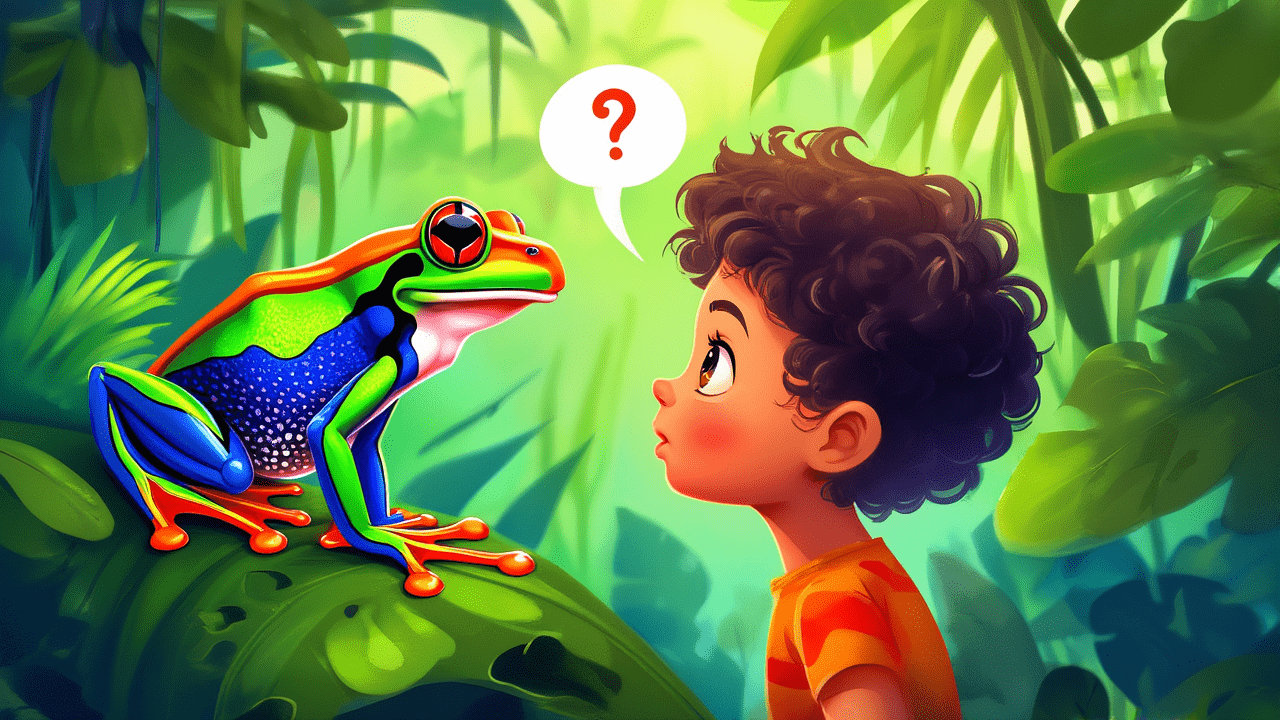
Have you ever wondered why some of nature’s most beautiful creatures, like this stunning frog, are also the most dangerous?
It’s like a big, flashy warning sign saying, “Hey, don’t even THINK about eating me!”
Scientists have a fancy word for this incredible strategy: Aposematism. Simply put, it’s an animal’s way of advertising its toxicity.
Imagine a hungry bird. It sees a juicy-looking, brightly colored bug, takes a bite, and immediately gets a terrible taste, or worse, feels sick! That bird quickly learns: “Bright colors mean bad news!”
We see this all over the animal kingdom: from the striking red and black of a ladybug, to the bold patterns of a coral snake, and the vivid hues of a poison dart frog.
This bright display isn’t just good for the toxic animal; it’s good for the predator too! The predator avoids a nasty meal, and the toxic animal lives to warn another day. It’s a win-win, really!
Sometimes, harmless animals even copy these bright colors to trick predators into thinking they’re dangerous, a clever trick called mimicry!
So, the next time you see a creature in dazzling colors, remember, it might just be nature’s way of sending a very clear, very important message: “Look, but please, don’t touch!”