
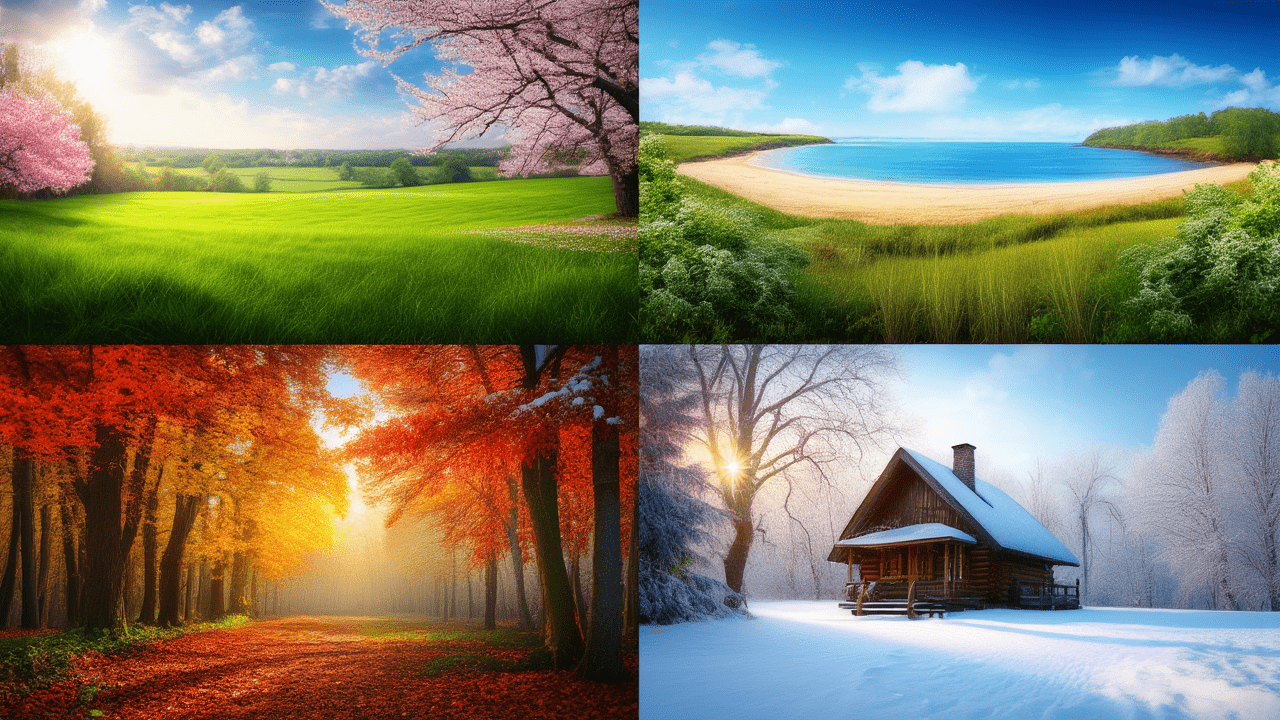
Hey everyone! We all know about the four main seasons, right—Spring, Summer, Autumn, and Winter. But what if I told you there’s a traditional calendar that sees, not four, but seventy-two seasons in a year?
It sounds a bit crazy, doesn’t it? Well, it all started in ancient China and was adopted and refined in Japan. They first divided the year into 24 “solar terms,” or sekki . These mark significant points in the sun’s annual path, like solstices and equinoxes, and also agricultural milestones.
But the Japanese took it a step further. They observed that nature changes much more frequently than just every two weeks. So, they split each of those 24 solar terms into three even smaller micro-seasons. That’s 24 multiplied by 3, giving us a grand total of… seventy-two! Each lasting about five days!
Why all this detail? It’s about deep observation and appreciation for the subtle shifts in our natural world. Imagine noticing “The East Wind Melts the Ice,” then “First Peach Blossoms,” and then “Bugs Emerge from the Ground”—all within fifteen days! It highlights the incredible, continuous dance of life around us.
This isn’t just an old calendar; it’s a way of living. It encourages mindfulness, prompting us to pause and truly notice the fleeting beauty and tiny wonders that unfold daily. It reminds us that every moment holds a unique, seasonal flavor.
So, why 72 seasons? Because nature doesn’t move in big, chunky blocks. It shifts, whispers, and evolves constantly. This ancient system helps us connect more deeply with those rhythms, fostering a richer, more appreciative understanding of our beautiful planet. It’s truly a celebration of impermanence and intricate beauty.