
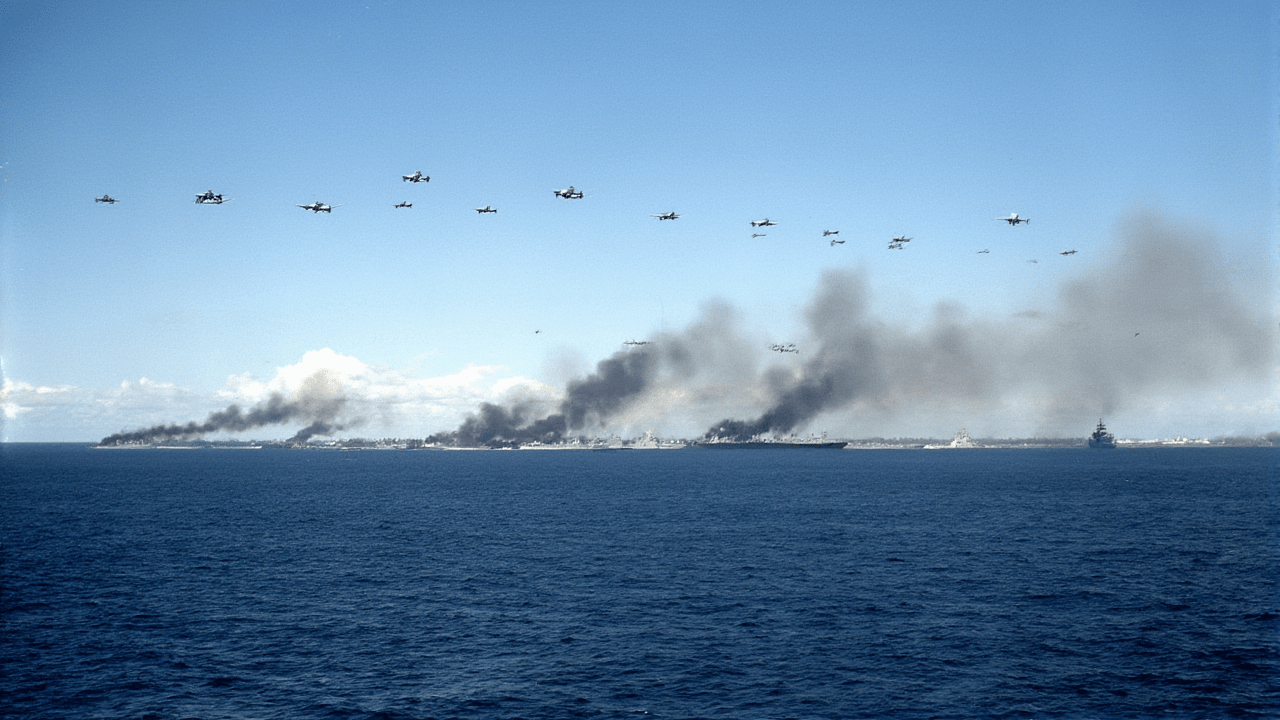
On December 7, 1941, a date that lives in infamy, Japan launched a surprise attack on Pearl Harbor, Hawaii. But why did they do it? What drove Japan to strike such a bold blow against the United States?
Well, Japan was a rapidly industrializing nation, but it lacked crucial natural resources like oil, rubber, and metal. To fuel its growing empire and war machine, Japan looked towards resource-rich Southeast Asia.
The United States, seeing Japan’s aggressive expansion into China and French Indochina, reacted by imposing severe economic sanctions. Crucially, they cut off Japan’s oil supply, threatening to cripple its economy and military.
Japan viewed the powerful U.S. Pacific Fleet, stationed at Pearl Harbor, as a major obstacle to its plans. They feared this fleet would intervene if Japan moved further into Southeast Asia to secure those vital resources.
So, Japan decided on a risky gamble: launch a devastating surprise attack on Pearl Harbor. Their goal was to cripple the U.S. fleet, buying them enough time to seize those resources and build an unshakeable defense perimeter before America could recover and retaliate. They hoped America would then negotiate, but they drastically underestimated America’s resolve.